

Instagram’s authenticity paradox in the AI age
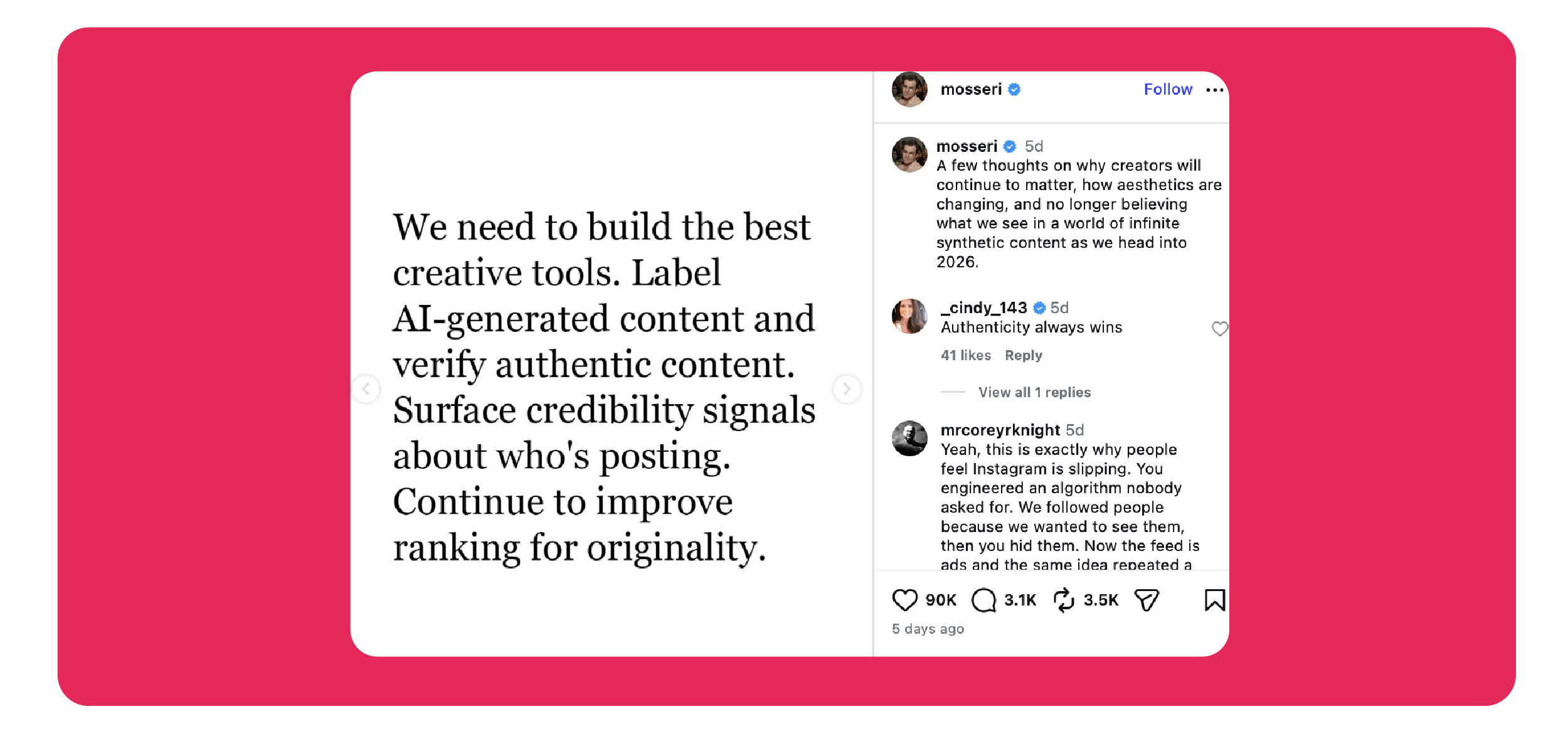
Instagram chief Adam Mosseri dropped a truth bomb most creators already know but don’t want to admit: authenticity is becoming infinitely reproducible.
Mosseri’s 20-slide thesis is straightforward: AI tools are getting so good that soon we won’t be able to tell human-created content from AI-generated material. The corporate cynic might say this is Meta justifying its massive AI investment by preparing us for an inevitable flood of AI-generated content. There’s probably truth to that, but most social media content has always been derivative. The difference is that now, instead of humans copying humans, AI can do it faster, cheaper, and at an infinitely greater scale. But AI can only remix what already exists.
Instagram’s plan involves better labeling (though Mosseri admits they won’t catch everything) and verification systems designed to highlight authentic creators. The platform will likely push Meta Verified harder, which financially benefits Meta while also addressing a real problem.
Right now, anyone can steal content, repost it, and potentially profit from it with minimal consequences. So if Instagram implements robust systems to verify and highlight original creators, it means they have to take creator attribution seriously in ways it hasn’t before.
Mosseri’s right that we’re entering uncharted territory. But the answer isn’t to panic or try to out-authenticity AI tools. It’s to remember what made social media work in the first place: people connecting with people.
The bottom line is the flood of AI content might finally force platforms to answer a question they’ve avoided for years. How do we actually value and protect human creativity?
The creators and brands who win in this new landscape won’t be those who can prove they’re human. They’ll be those who remind us why being human matters in the first place.
No algorithm, artificial or otherwise, can replicate that.
To learn more, click here.